About

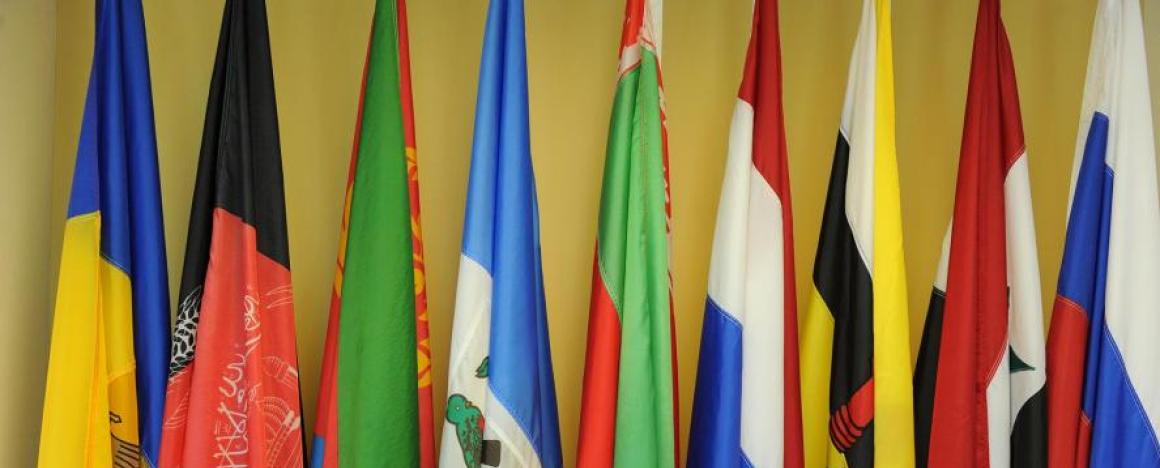
Nine flags from various countries

A major in international relations is interdisciplinary. However, it should not be conceived simply as an agglomeration of knowledge from several fields. Rather, both faculty and students in international relations strive to compare and integrate the methodologies and evidence they acquire in different disciplinary settings as they seek answers to similar questions.

Academic Mission

The International Relations Program at Tufts University offers a course of study for undergraduate students with a primary interest in international and regional studies. The field of international relations includes the study of:

  • The history, politics, economics, and cultures of regional systems around the world
  • International economics
  • Global health, nutrition, and the environment as they relate to international relations
  • The causes and consequences of war and the conditions for peace
  • The spread of ideas through global practices and behaviors such as human rights, migration, urbanization, media, technology, empires and colonialism, and the study of culture
  • How individuals perceive themselves in their relationships to the world through prisms such as gender, class, religion, race, nationality, and ethnicity
Program Director

faculty photo

Tatiana Chudakova

Medical anthropology, science and technology, environment, ethnicity and indigeneity, nationalism, post-socialism. Geographic focus: Russia; North Asia My first book, Mixing Medicines: the Politics of Health in Postsocialist Siberia (Fordham 2021), follows Russia's official medical sector's attempts to reinvent itself through state-led initiatives of "medical integration" that aim to recuperate indigenous therapeutic traditions associated with the state's ethnic and religious minorities. Based in Buryatia, a traditionally Buddhist region on the border of Russia and Mongolia known for its post-Soviet revival of "Tibetan medicine" and shamanism, the book traces the uneven terrains of encounter between indigenous healing, the state, and transnational medical flows. My current research project explores how the use of "smart drugs" reconfigures discourses and experiences of clinical, social, and work-related efficacy, as they circulate across borders and enter divergent pharmaceutical, medical, and ethical regimes between Russia and the United States. Focused on a contentious category of pharmaceuticals labeled "nootropics" – a chemically fluid taxonomic classification that encompasses a variety of synthetic and naturally-derived substances designed to enhance cognitive functions – the project interrogates what types of selves, regimes of labor, therapeutic ideologies, and temporalities of embodiment these substances help mediate and enact.